Product links on this page go to Amazon. If you buy through them, Electric Tampa earns a commission. How we pick and earn
A charged power station covers the first night. Every night after that depends on how you refill it, and after a hurricane the grid may be out for days. There are a few ways, and most households end up using two.
Start full
Charge every station to 100% at the start of hurricane season, and top it up again when a storm enters the five-day forecast. LiFePO4 batteries hold their charge well in storage, but a station that has sat since spring powering a few things will not be full.
Solar
Solar is the one source that doesn’t need fuel or a running car, and Tampa has plenty of sun even in hurricane season. NREL’s PVWatts model gives Tampa about 5.3 to 5.9 peak sun-hours a day from June through November.
In practice that means, on an average day:
- about 250 W of panels refills a 1 kWh station;
- about 500 W refills a 2 kWh station.
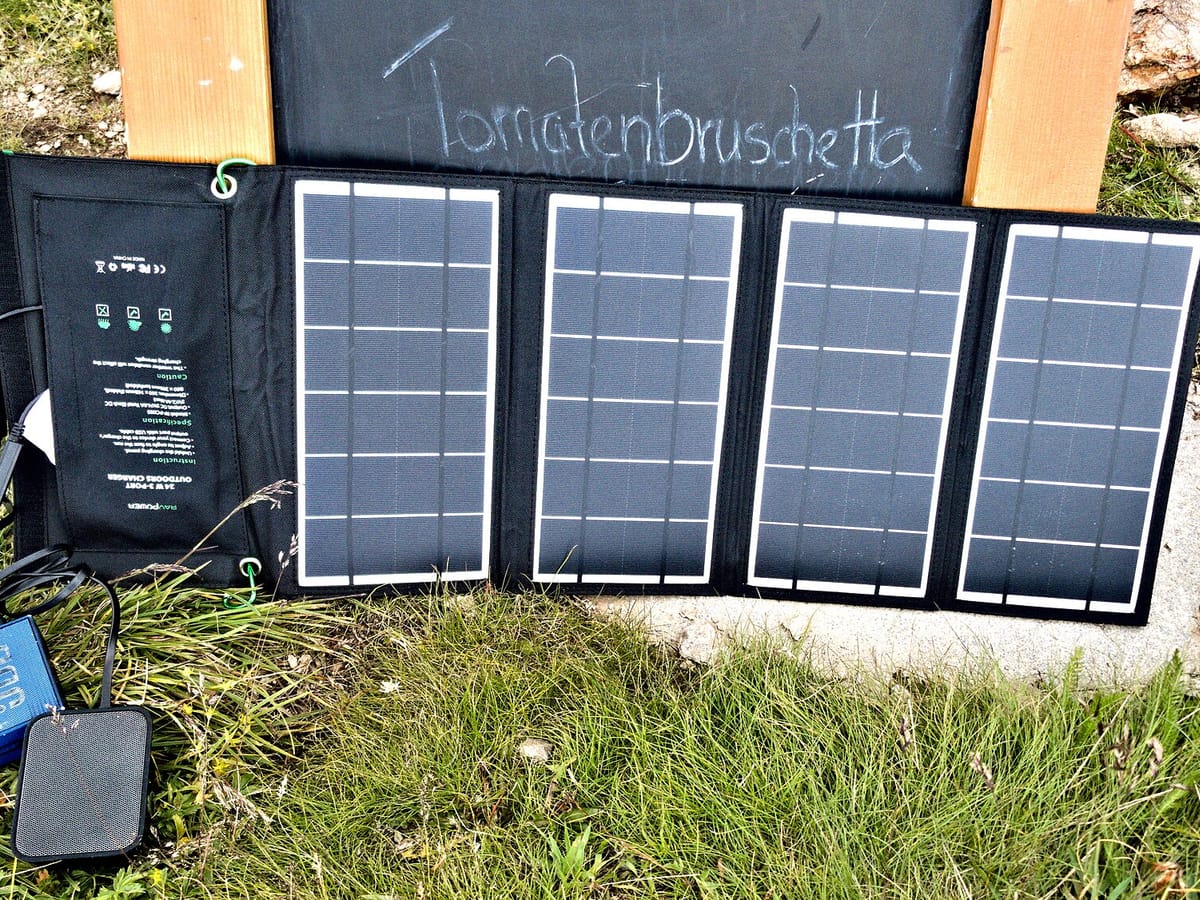
Cloudy days after a storm need more, so err toward bigger panels or a bigger station. Check the station’s solar input limits before buying panels: the Jackery Explorer 1000 v2 takes up to 400 W, the Anker SOLIX C1000 Gen 2 up to 600 W, and the BLUETTI Elite 200 V2 up to 1,000 W. The details, including series and parallel wiring, are in solar panels for a power station.
2 kWh power station
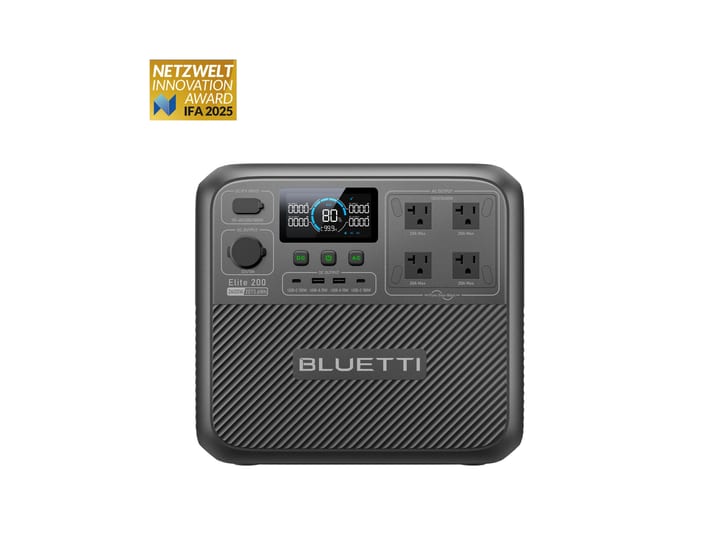
BLUETTI Elite 200 V2
BLUETTI Elite 200 V2
Twice the battery of the 1 kWh units, 2,600 W of output, and up to 1,000 W of solar input, enough to refill it on a sunny day.
- Capacity
- 2,073.6 Wh, LiFePO4
- AC output
- 2,600 W
- Solar input
- 1,000 W, 12–60 V
- Wall charge
- 80% in 1 h (Turbo)
- Weight
- 53.35 lb
- Warranty
- 5 years
Suits: A refrigerator, a CPAP, a fan and the internet overnight, or a small window AC for about three hours.
Weigh: About 53 pounds and not expandable. BLUETTI does not publish its surge rating.
The car
Most stations take a 12 V car-socket input, but it’s slow: about 100 W.
- BLUETTI rates the Elite 200 V2 at 96 W from a 12 V socket.
- Jackery says the Explorer 1000 v2 takes about 12 hours from the car.
- EcoFlow’s smaller RIVER 3 Plus fills from the car in about 3.3 hours.
That’s fine for a small station or a top-up during an evacuation drive. Don’t idle a gasoline car in a garage to charge anything: it’s the same carbon monoxide risk as a generator.
A generator
The fastest way is a generator’s AC output. Several of these stations refill in about an hour on fast AC charging: EcoFlow says the RIVER 3 Plus recharges in about an hour from a gas generator, and BLUETTI rates the Elite 200 V2 at 80% in an hour. The larger home-backup units can also take a generator directly: Anker’s F3800 Plus, with Anker’s generator adapter, passes a 240 V generator’s power through to its outputs while it charges.
The routine that works: run the generator for an hour or two in the daytime, outside and well away from the house, refill the station and run the AC while it’s going, then shut the generator down and let the station carry the night quietly.
A simple plan
- Station charged full before the storm.
- Solar out on the first clear day, in the sun, with the station itself in the shade.
- The car as a backup for a small station.
- The generator for an hour a day if the clouds stay, outside and 20 feet from the house.
Comparing stations? See battery power stations for a Tampa Bay house.