Product links on this page go to Amazon. If you buy through them, Electric Tampa earns a commission. How we pick and earn
Nearly every electric car comes with a cord for a regular outlet, and plenty of owners never use anything else. Whether you should depends on how far you drive and what your panel can spare.
How fast each level charges
The Department of Energy’s Alternative Fuels Data Center puts it simply:
- Level 1, a 120 V household outlet at about 1.9 kW, adds about 5 miles of range per hour. Overnight, 10 to 12 hours, that’s 50 to 60 miles.
- Level 2, a 240 V circuit at about 7.2 kW for a typical home charger, adds about 25 miles per hour. A night refills most cars.
If your daily driving is a Brandon-to-downtown commute, Level 1 may cover it. If two people drive, the drives are long, or you want a full battery before a hurricane evacuation, Level 2 is the practical choice.
Sizing the circuit
The National Electrical Code treats an EV charger as a continuous load, so the circuit has to be rated at 125% of the charger’s current:
| Charger setting | Circuit breaker | Typical install |
|---|---|---|
| 32 A | 40 A | Plug-in or hardwired |
| 40 A | 50 A | NEMA 14-50 outlet or hardwired |
| 48 A | 60 A | Hardwired |
| 50 A | 70 A | Hardwired |
Many chargers can be set lower to match the circuit you have; the setting goes on the charger’s label, which the inspector checks.
The GFCI rule
Florida’s building code adopts the 2020 National Electrical Code, which requires GFCI protection for 240 V receptacles in a garage or outdoors. A 14-50 outlet for a plug-in charger needs a GFCI breaker. Some chargers already have their own ground-fault protection, and the two can trip against each other; ChargePoint recommends hardwiring its charger where a GFCI is required. Ask the electrician which way suits the charger you pick.
J1772 or NACS
Most non-Tesla EVs sold before 2025 use the J1772 plug. Tesla’s connector, standardized as NACS (SAE J3400), is now on many new cars from other brands too. Most chargers here come in both versions. Buy the one that matches the car you’ll keep longest; adapters work, but they’re one more thing to lose.
If the panel is full
Plenty of Tampa Bay houses have 100 or 150 A service, and a 48 A charger alongside a central AC, an electric range and an electric water heater may not fit on it. The electrician’s load calculation decides.
When it doesn’t fit, a load-managed charger is the alternative to a service upgrade. The code allows an energy management system to limit the charger based on what the rest of the house is drawing, and the managed charger’s load can then be left out of the service calculation. Emporia includes the panel monitor that does this; Wallbox and Autel sell it as an add-on.
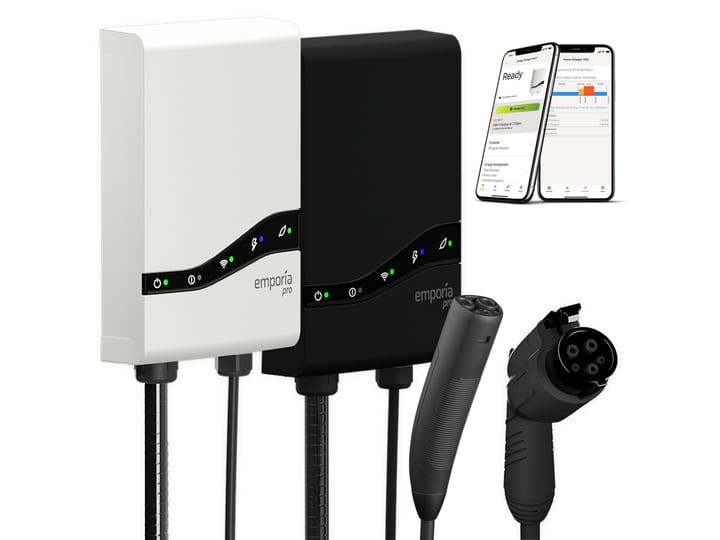
Smart Level 2 with load management, 48 A
Emporia Pro with PowerSmart
Emporia Pro (J1772, hardwire)
A 48 A charger bundled with a panel monitor that gives the car only the capacity the house isn't using, which can avoid a panel upgrade.
- Current
- 48 A hardwired, 40 A plug
- Connector
- J1772 (NACS version too)
- Cable
- 25 ft
- Load management
- PowerSmart, included
- Listing
- UL 2594, ENERGY STAR
- Enclosure
- NEMA Type 4
Suits: Older Tampa Bay houses with 100 or 150 A service, where the load calculation says a charger won't fit on its own.
Weigh: The monitor clamps go inside your panel, which is electrician's work. 40 A when plugged into a 14-50 instead of hardwired.
Permit and off-peak charging
Tampa Electric’s charger installation page says you or your licensed electrician must get a permit from the city or county, followed by a final inspection.
Tampa Electric doesn’t have a separate EV rate. Its EV savings page points owners to Energy Planner, its time-of-use program, for charging off-peak, and to Prime Time Plus for bill credits. A charger with scheduling, or the car’s own charging timer, does the timing. Duke Energy Florida’s earlier Park & Plug program is closed.
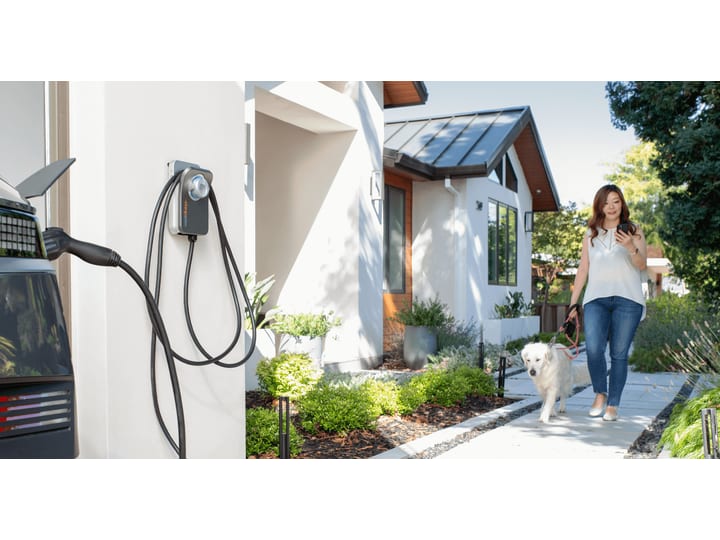
Smart Level 2, up to 50 A
ChargePoint HomeFlex
ChargePoint CPH50 (J1772, hardwired)
Set from 16 to 50 A in the app to match whatever circuit you have, with scheduling for off-peak charging.
- Current
- 16–50 A, set in app
- Install
- Hardwire or 14-50 / 6-50 plug
- Connector
- J1772 (NACS version too)
- Cable
- 23 ft
- Listing
- UL 2594 / 2231, ENERGY STAR
- Warranty
- 3 years
Suits: Houses where the electrician will hardwire it, and drivers who want the charger to follow a time-of-use schedule.
Weigh: Full 50 A needs a hardwired 70 or 80 A breaker; plugged into a 14-50 it tops out at 40 A. Outdoors on a plug, ChargePoint recommends hardwiring because a GFCI breaker can trip against the charger's own protection.
Curious whether the car can power the house in an outage? See EVs as home backup.