Product links on this page go to Amazon. If you buy through them, Electric Tampa earns a commission. How we pick and earn
After Milton, the houses that coped had settled one question before the storm: what has to keep running, and how many watts that takes. Get it wrong one way and the generator trips every time the fridge compressor kicks on. Get it wrong the other way and you are hauling, fueling and listening to twice the machine you needed.
Here is how to size one for a Tampa Bay house.
Running watts and starting watts
A generator has two ratings, and both matter.
- Running watts (also called rated watts) is what it can supply hour after hour. Add up everything you want on at the same time, and the total has to stay under this number.
- Starting watts (also called surge or peak watts) is the short burst it can give for a second or two. Anything with a motor or compressor (the refrigerator, a freezer, an AC, a well pump) needs two to three times its running watts for that moment it starts.
Manufacturers tend to advertise the bigger starting number on the box. Size on running watts, then check that the starting watts cover the largest motor you’ll start.
What a Florida house draws
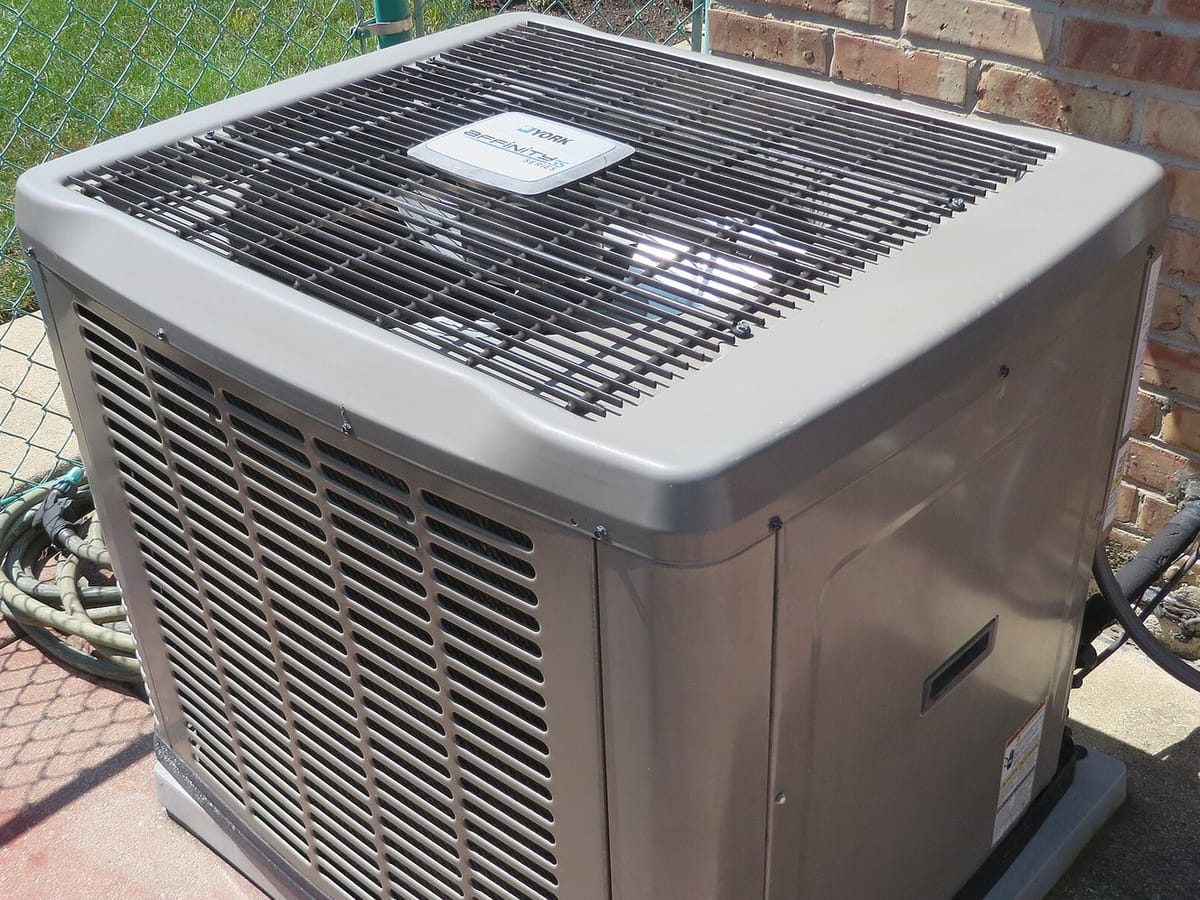
These are Champion Power Equipment’s ranges from its generator wattage chart. Your own appliances have the real numbers on their nameplates, usually inside the fridge door or on the side of the condenser.
| Appliance | Running watts | Starting watts |
|---|---|---|
| Refrigerator | 150–400 | 800–1,200 |
| Chest or upright freezer | 100–500 | 500–1,000 |
| Window AC, 5,000 BTU | 450–600 | 900–1,200 |
| Window AC, 10,000 BTU | 900–1,200 | 1,800–2,400 |
| Central AC, 3 ton | 3,000–3,500 | 5,000–6,000 |
| Central AC, 4 ton | 4,000–5,000 | 6,500–8,000 |
| Well pump, ½ HP | 750–1,000 | 1,500–2,000 |
| Microwave | 600–1,200 | none |
| Ceiling fan | 15–75 | none |
| TV | 80–400 | none |
| Wi-Fi router and modem | 10–20 | none |
| CPAP, no heater | 30–60 | none |
| LED bulb | 8–15 each | none |
| Electric water heater | 3,000–4,500 | none |
| Clothes dryer | 4,000–6,000 | none |
The last two rows are why “power the whole house” usually means a standby unit. A portable can run them, but not alongside much else.
The sizes that cover most houses
The essentials: a 3,500- to 4,500-watt generator
The refrigerator, a chest freezer, ceiling and box fans, a few lights, the internet, phone and laptop chargers, a TV, a CPAP. That’s 1,500 to 2,500 running watts with a compressor starting on top. A 3,500- to 4,500-watt inverter generator carries it with room to spare, runs quieter than an open-frame unit, and sips fuel at that light load.
This is the size that makes a week without power livable, but it won’t cool the house.
The essentials plus one cool room: a 5,000- to 7,500-watt generator
Add a 10,000-BTU window unit or a ductless mini-split in the bedroom, a microwave and a coffee maker, and you are at 3,500 to 5,000 running watts with the AC’s start on top. In August that one cool room is the difference between sleeping and not. A well pump, common in rural Pasco and Hillsborough, belongs in this tier too.
A mini-split with an inverter compressor ramps up instead of slamming on, so it asks for little more than its running watts to start. That makes it the easiest cooling load a generator can carry.
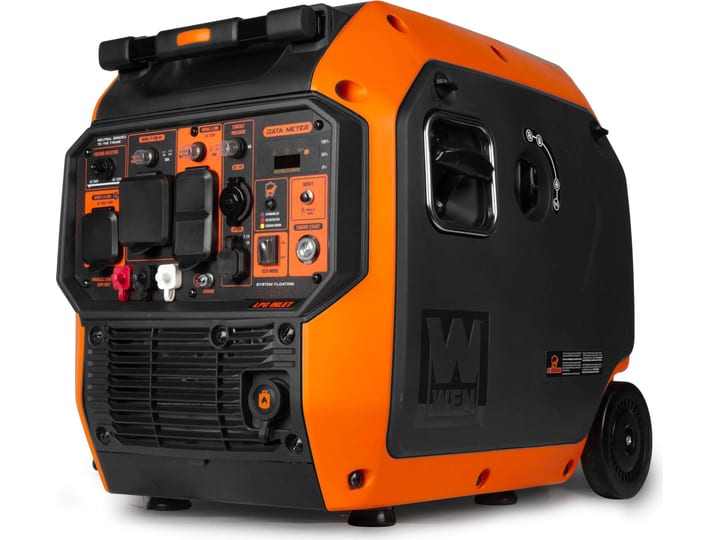
Large dual-fuel inverter
WEN DF680iX
WEN DF680iX
An inverter big enough for the essentials plus a bedroom AC or mini-split, with a 30-amp 240 V outlet for a transfer switch.
- Running / surge
- 5,100 / 6,800 W gas
- On propane
- 4,500 / 6,000 W
- Run time
- 6.1 h gas, 9 h propane at ½ load
- Outlets
- L14-30R, TT-30R, 2× 5-20R
- Weight
- 94.8 lb
- CO shutoff
- CO Watchdog
Suits: The essentials plus one cool room, connected through an inlet and an interlock or transfer switch.
Weigh: Ships with a bonded neutral, which decides the kind of transfer switch the electrician fits. Run time on a 20-pound propane tank is about 9 hours at half load.
Central air: 9,000 running watts and up
A 3-ton central system needs 3,000 to 3,500 running watts and a starting surge near 5,000 to 6,000 on top of everything else in the house. Plan on a large open-frame portable rated 9,000 running watts or more, connected through a transfer switch, or a standby generator sized by an electrician’s load calculation.
A soft starter installed in the condenser cuts that starting surge, which can let a smaller generator start the AC. It goes inside the outdoor unit, so it’s an AC technician’s job.
Work out your own number
- List what has to run at the same time during an outage, with the running watts from each nameplate.
- Add the running watts.
- Find the single biggest starting surge on the list (usually the AC or the fridge) and add the difference between its starting and running watts.
- Leave about 20% headroom on the running total, so the generator isn’t flat out for days.
Example: fridge 400, chest freezer 300, three ceiling fans 225, lights 120, internet 20, TV 150, CPAP 60, 10,000-BTU window AC 1,200. Running total: 2,475 watts. The window AC is the largest start: 2,400 minus 1,200 adds 1,200 for that moment, so 3,675 watts at its peak. With 20% headroom on the running total, a 4,500-watt-class generator runs this list comfortably.
How the power gets into the house
There are two safe ways.
- Extension cords from the generator to plug-in appliances. Use outdoor-rated, heavy-gauge cords, sized for the load and as short as the 20-foot setback allows.
- An inlet and a transfer switch or interlock, installed with a permit, so the generator feeds chosen circuits: the well pump, a hardwired fan, the bedroom AC circuit. That’s how you run anything without a plug. A 120 V generator can back up selected 120 V circuits this way; 240 V loads need a generator with a 120/240 V outlet, and the electrician matches the equipment to both.
Never plug a generator into a wall outlet or the dryer outlet with a two-ended cord. It sends power back up the utility’s lines, where it can kill a lineworker, and it can burn up the generator when the grid comes back.
Inverter or open-frame
- Inverter generators produce clean power for electronics, throttle down at light loads, and run quieter. They make the most sense in the essentials and one-cool-room tiers.
- Open-frame generators reach higher wattages for central air or a well pump plus the rest of the house, but they’re heavier and louder. Their engines hold a constant speed whatever the load, so fuel use falls at light loads but not as far as an inverter’s, which slows its engine down.
Either way, look for a carbon monoxide shutoff. The Consumer Product Safety Commission points buyers to models certified to PGMA G300-2023 or UL 2201, which shut down when CO builds up and, under UL 2201, emit less of it.
Once you know the size, pick the fuel: gas, propane or both.