Product links on this page go to Amazon. If you buy through them, Electric Tampa earns a commission. How we pick and earn
A generator is only as useful as the fuel you can get for it, and in Tampa Bay that’s the weak point. The week of Milton made it plain.
What happened to gas after Milton
More than 40% of Tampa Bay’s stations were already out of gas the Tuesday morning before landfall, as people filled cars and cans to evacuate. By the Sunday after the storm, GasBuddy counted 88% of Tampa-area stations without gas.
Two things keep that from clearing quickly. Stations need power to pump, and fuel reaches the region by ship: Port Tampa Bay handles more than 43% of the state’s petroleum imports, so when the port closes for a storm, deliveries stop.
Florida law helps with the first part. Section 526.143 requires larger stations within half a mile of an interstate or an evacuation route to be prewired with a transfer switch so they can pump on a generator. That keeps pumps working; it doesn’t put fuel in the tanks.
The practical lesson: whatever runs your generator should already be at the house before the storm.
Gasoline
Gasoline is the fuel every portable runs on, and it gives the most watts per tank. The problems are storage and supply.
- It goes stale. Untreated gasoline breaks down within months, and ethanol blends draw in moisture, which gums carburetors in a generator that sat since last season. A storage stabilizer such as STA-BIL is rated to keep fuel usable for up to 24 months; add it when you fill the cans, not later.
- You need a lot of it. A large generator under a real load burns most of a tank in a day. Three or four days means several cans.
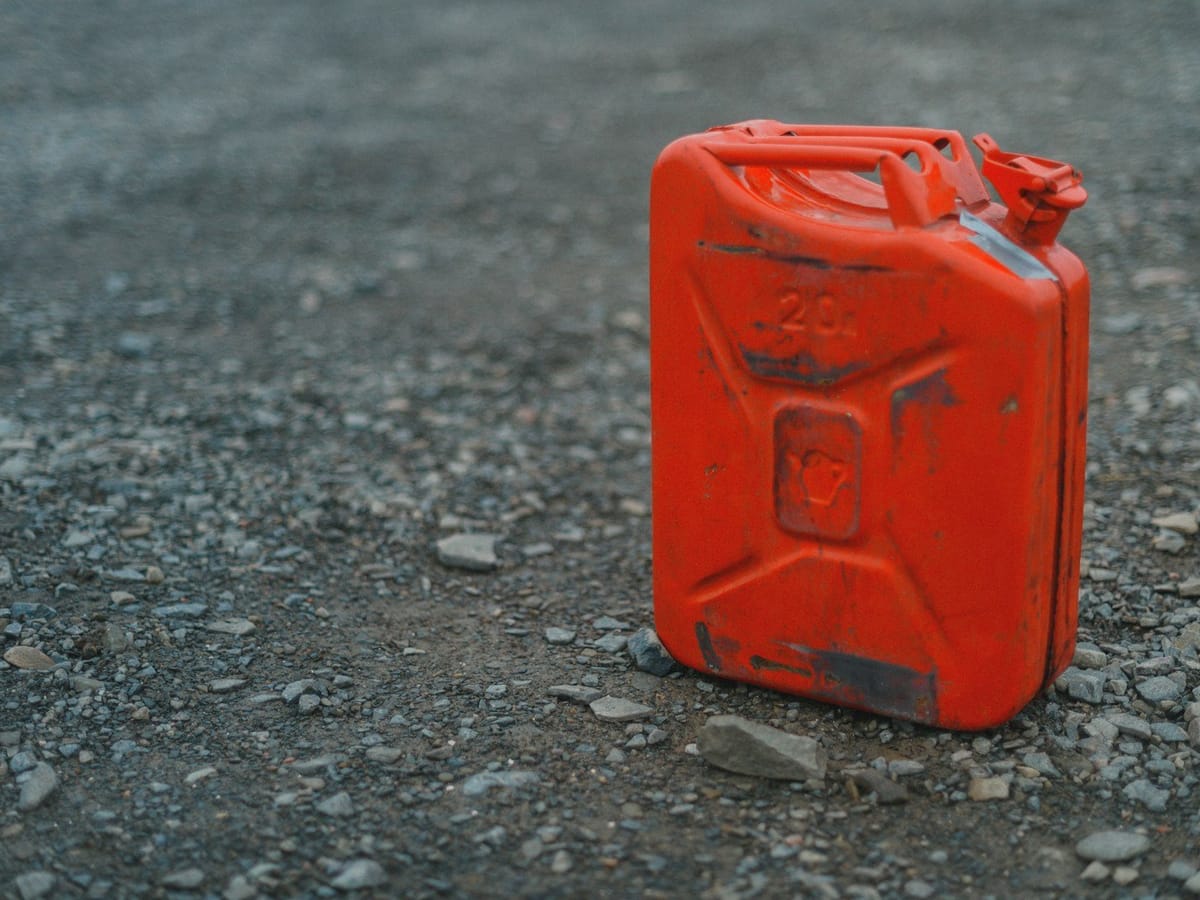
- Storing it. Keep it in approved cans, outside the living space, away from the water heater and anything with a pilot light, and fill cans on the ground, never in a truck bed.
Before hurricane season, run the generator for a few minutes, then before the storm fill the cans with treated fuel. Use the old fuel in the car.
Propane
Propane doesn’t go stale. A 20-pound tank, the barbecue size, holds about 4.7 gallons and keeps for years, so you can fill tanks in May and have them ready in October. Exchange cages at hardware and grocery stores are a separate supply from the gas stations.
The trade-offs:
- Less power. Every dual-fuel model we list makes about 10% fewer watts on propane. The Champion 4500’s 3,500 running watts on gas become 3,150 on propane.
- Shorter runs per tank. Champion rates that model at 21 hours on a 20-pound tank at a quarter load. WEN rates the larger DF680iX at about 9 hours at half load. Heavier loads empty a tank in hours, so plan on several tanks for a long outage.
- Storing it. Cylinders stay outside, upright, out of the sun when possible, and never in the garage or the house.
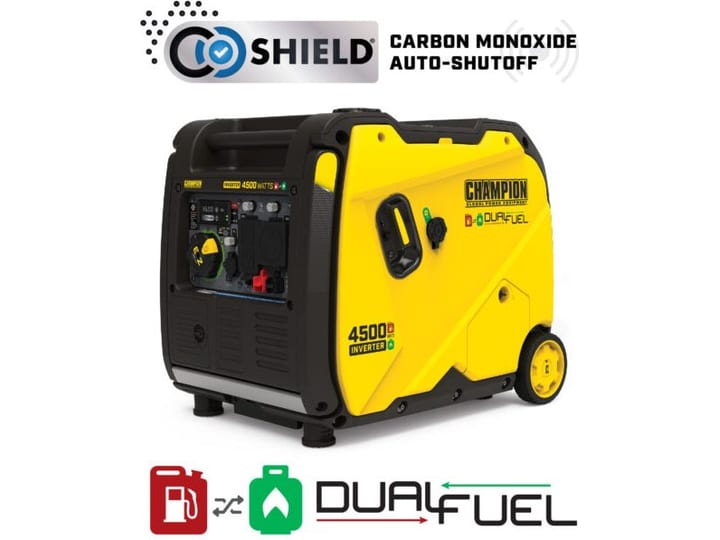
Mid dual-fuel inverter
Champion 4500-Watt Dual Fuel Inverter
Champion 201319
Enough for the essentials with headroom, on gasoline or a 20-pound propane tank, with electric start and a CO shutoff.
- Running / starting
- 3,500 / 4,500 W gas
- On propane
- 3,150 / 4,500 W
- Run time
- 14 h gas, 21 h propane at ¼ load
- Noise
- 61 dB(A) at 23 ft
- Weight
- 99.2 lb
- CO shutoff
- CO Shield
Suits: Fridge, freezer, fans, lights, CPAP and a small window AC, by extension cords or a transfer switch for a few 120 V circuits.
Weigh: Its outlets are 120 V only (household and RV), so it cannot supply 240 V loads; an electrician can connect it to selected 120 V circuits through a listed transfer switch. About 99 pounds on wheels.
Why dual-fuel suits Florida
A dual-fuel generator runs on either, and switching takes seconds. That’s the answer to the Milton problem: run propane while the stations are dry, switch to gasoline when supply comes back, and stretch whichever you have. For most Tampa Bay houses it’s the right default.
Natural gas
If the house already has natural gas, a standby generator or a tri-fuel portable can run on it for as long as gas service stays on, and the underground gas lines don’t depend on the power grid. Natural gas makes the fewest watts of the three fuels, and connecting to it means a gas line run to the generator’s spot: a gas permit and a licensed contractor, on top of the electrician.
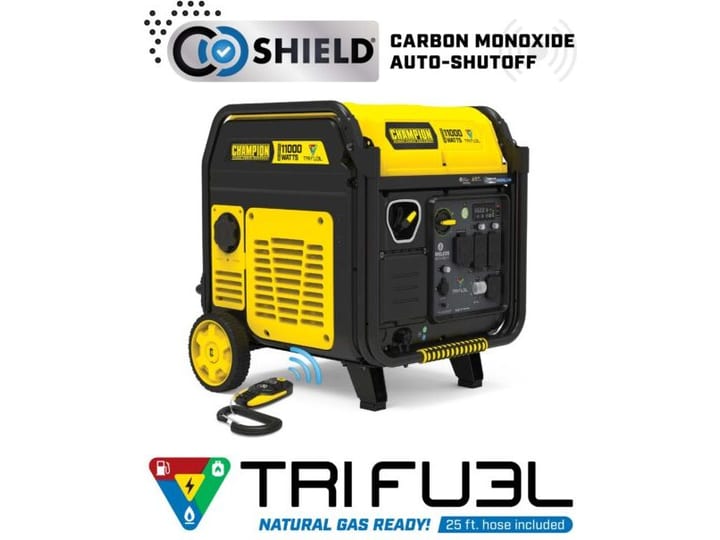
Large tri-fuel inverter
Champion 11,000-Watt Tri Fuel Inverter
Champion 201423
Central-air wattage with inverter manners: quieter than the open-frames, a wireless remote start, and gasoline, propane or natural gas.
- Running / starting
- 9,000 / 11,000 W gas
- Propane / natural gas
- 8,100 / 7,290 W running
- Run time
- 15 h gas at ¼ load
- Outlets
- L14-30R, 14-50R, 2× GFCI 5-20R
- Weight
- 212.3 lb
- CO shutoff
- CO Shield
Suits: Whole-house loads through a 50-amp inlet, in a house that already has natural gas or keeps propane on hand.
Weigh: About 212 pounds. Running it on natural gas needs a gas line run to where it sits outside: a gas permit and a plumber, on top of the electrician.
A fuel plan, before June
- Decide which fuel will carry the first 72 hours, assuming no station is open.
- For gasoline: approved cans, stabilizer, a full set before any storm watch.
- For propane: as many filled 20-pound tanks as your loads need for three days, checked for dents and rust.
- Start the generator on each fuel once a season, under a little load.
Not sure how big a generator you need yet? Start with the sizing guide.