Product links on this page go to Amazon. If you buy through them, Electric Tampa earns a commission. How we pick and earn
Pre-charged mini-split kits are sold on a simple pitch: hang the indoor unit, set the outdoor unit, click the sealed lines together, and you have a heat pump in the bedroom without paying an HVAC contractor.
Some of that holds up. Some of it runs into federal refrigerant rules, Florida’s contractor law and the permit desk. Here is each piece, with the source.
What “pre-charged” means
A conventional mini-split comes with copper line sets that the installer cuts to length, flares, connects, pressure-tests with nitrogen and evacuates with a vacuum pump before releasing the refrigerant. A pre-charged kit ships with the refrigerant already in the line set behind sealed quick-connect fittings. You thread the lines, tighten the fittings, and the refrigerant stays in the system.
It removes the vacuum pump and gauges from the job. It doesn’t remove the paperwork.
EPA: certification to connect the lines
EPA’s Section 608 program governs who may handle refrigerant. Its published answers address mini-splits directly:
Is technician certification required to install an R-410A mini-split? Yes. Adding or removing refrigerant from a mini-split as part of installation, and/or connecting or disconnecting hoses or pre-charged lines requires a section 608 technician certification.
So connecting the quick-connect lines is, in EPA’s reading, certified work. A window air conditioner is different: it’s a factory-sealed small appliance, and you just plug it in.
Pre-charged mini-split, 115 V
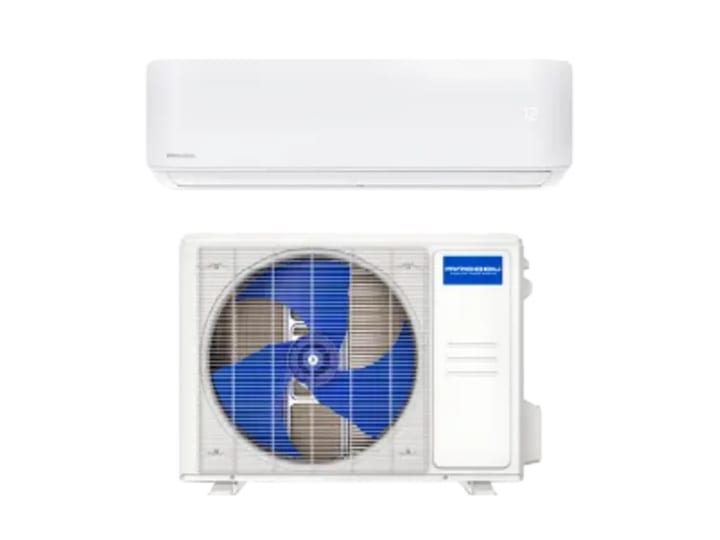
MRCOOL DIY 4th Gen 12k
MRCOOL DIY-12-HP-WM-115C25
A 115 V heat pump sold with a 25-foot pre-charged Quick Connect line set and Wi-Fi control, and the highest efficiency of the four.
- Capacity
- 12,000 BTU
- SEER2 / EER2
- 22.5 / 12.5
- Heating
- Heat pump, HSPF2 9.0
- Power
- 115 V, hardwired
- Refrigerant
- R-410A
- Lines
- 25 ft pre-charged
Suits: A bedroom, office or addition on a 115 V circuit, by an owner who wants to do the mounting and line run.
Weigh: EPA says connecting even pre-charged lines needs a Section 608 certification, and the manual calls for a licensed electrician for the wiring. Lines connect once; they cannot be reused.
Florida: who may do the work
Florida licenses air-conditioning work under Chapter 489: Class A and Class B air-conditioning contractors, with Class B limited to 25 tons of cooling per system.
The exception is the owner-builder exemption in section 489.103(7). You can do the work yourself on your own one- or two-family house if:
- it’s for your own use, not built to sell or rent (a sale or lease within a year is presumed to violate this);
- you supervise the work personally and don’t hand it to unlicensed helpers;
- you appear in person and sign the permit application yourself.
Electrical work has a matching owner exemption in section 489.503(6). The exemption covers the state license. It doesn’t replace the EPA certification for the refrigerant connection, and it doesn’t skip the permit.
The permit
A mini-split is permitted work across the bay:
- City of Tampa: a residential electric, plumbing and mechanical permit, with a mechanical final inspection.
- Unincorporated Hillsborough: the county exempts portable cooling units only, not mechanical or electrical work. Its permit forms include a pressure-test affidavit for A2L refrigerants, which covers the newer R-454B and R-32 units.
- Pinellas: the county lists a “New Minisplit with Electric” residential permit; each city in Pinellas runs its own building department.
The electrical side
A mini-split is hardwired on its own circuit. MRCOOL’s own DIY manual says the wiring must be installed by a licensed electrician, on a dedicated circuit sized to the unit. The National Electrical Code, adopted by the Florida Building Code, requires a disconnect within sight of the outdoor unit.
Hurricane tie-down
The Florida Building Code’s mechanical chapter, section 301.15, requires outdoor equipment to resist the wind pressures the building code sets, by fastening it to a rated stand, pad, curb or wall bracket. A condenser sitting loose on a slab doesn’t pass.
Warranties
- MRCOOL DIY: MRCOOL’s warranty says a state-certified or licensed HVAC contractor is not required for warranty on the DIY series. The line sets can be connected only once.
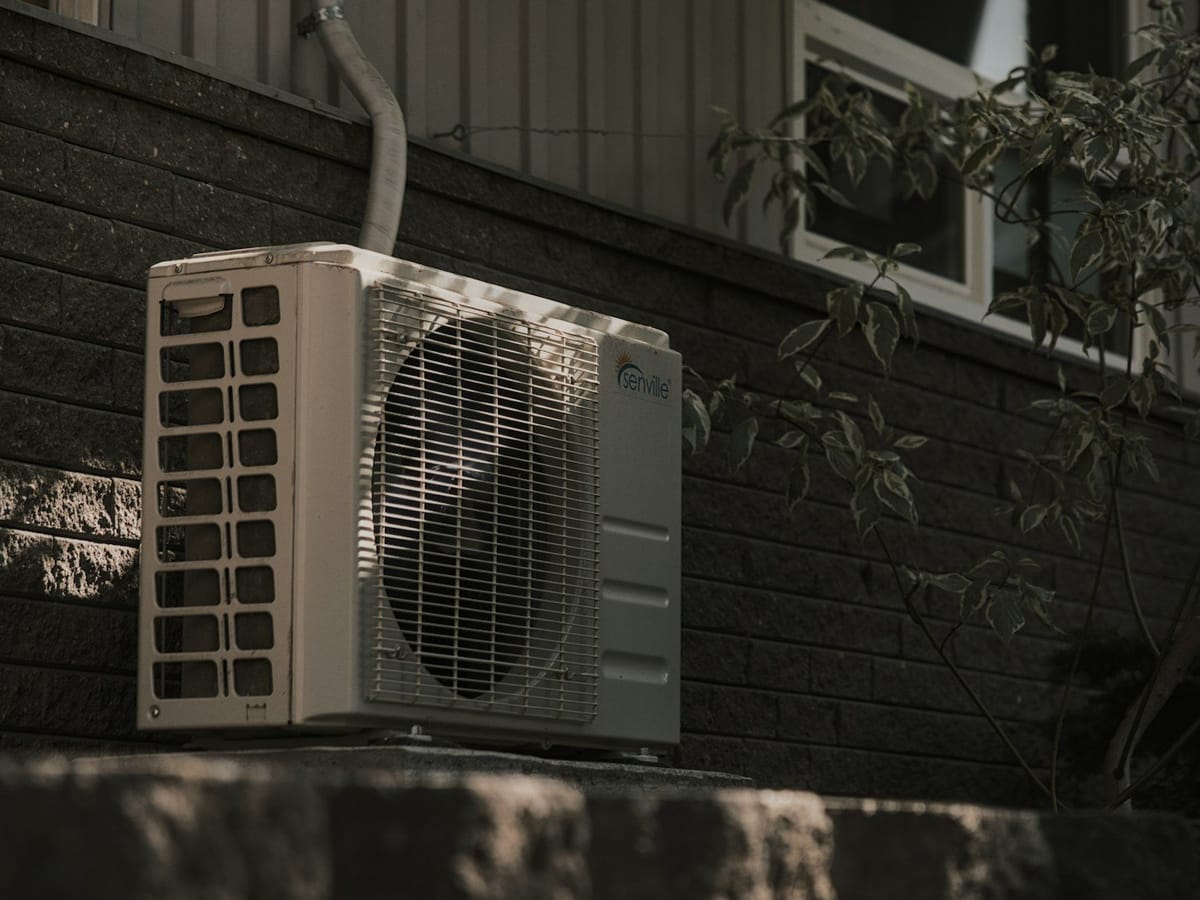
- Senville: says its units must be installed and commissioned by a professional.
- Pioneer: registration is required for the full term.
Read the warranty before you buy, not after.
So which way?
- Renting, or want no permit at all: an inverter window unit. It plugs in, runs gently on a generator, and needs nothing installed.
- Owner, handy, willing to do it by the book: a pre-charged kit can work. You’d pull the permit as owner-builder, have the circuit and disconnect done right, fasten the condenser for wind, and have someone certified make the refrigerant connection.
- Anything multi-zone, 230 V, or with a longer line run: an HVAC contractor.
Inverter window unit
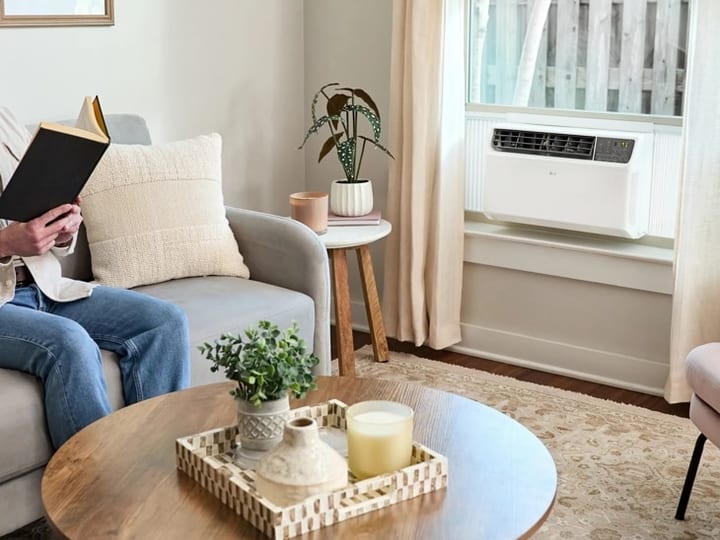
LG Dual Inverter Window AC, 12,000 BTU
LG LW1224IVSM
A 12,000-BTU window unit with a variable-speed compressor, so it slows down instead of cycling on and off. It plugs into a normal outlet and draws 1,020 W at full output.
- Capacity
- 12,000 BTU
- Efficiency
- CEER 15
- Power
- 115 V plug-in, 1,020 W, 9.1 A
- Refrigerant
- R-32
- Noise
- 44–58 dBA
- ENERGY STAR
- Certified
Suits: Renters, or anyone who wants one cool room on a generator or a large battery with no installation.
Weigh: Cooling only, no heat. It weighs 85 pounds, needs a window 27 to 39 inches wide, and carries a one-year warranty.
Planning to run it on backup power? See running a mini-split on a generator or a battery.